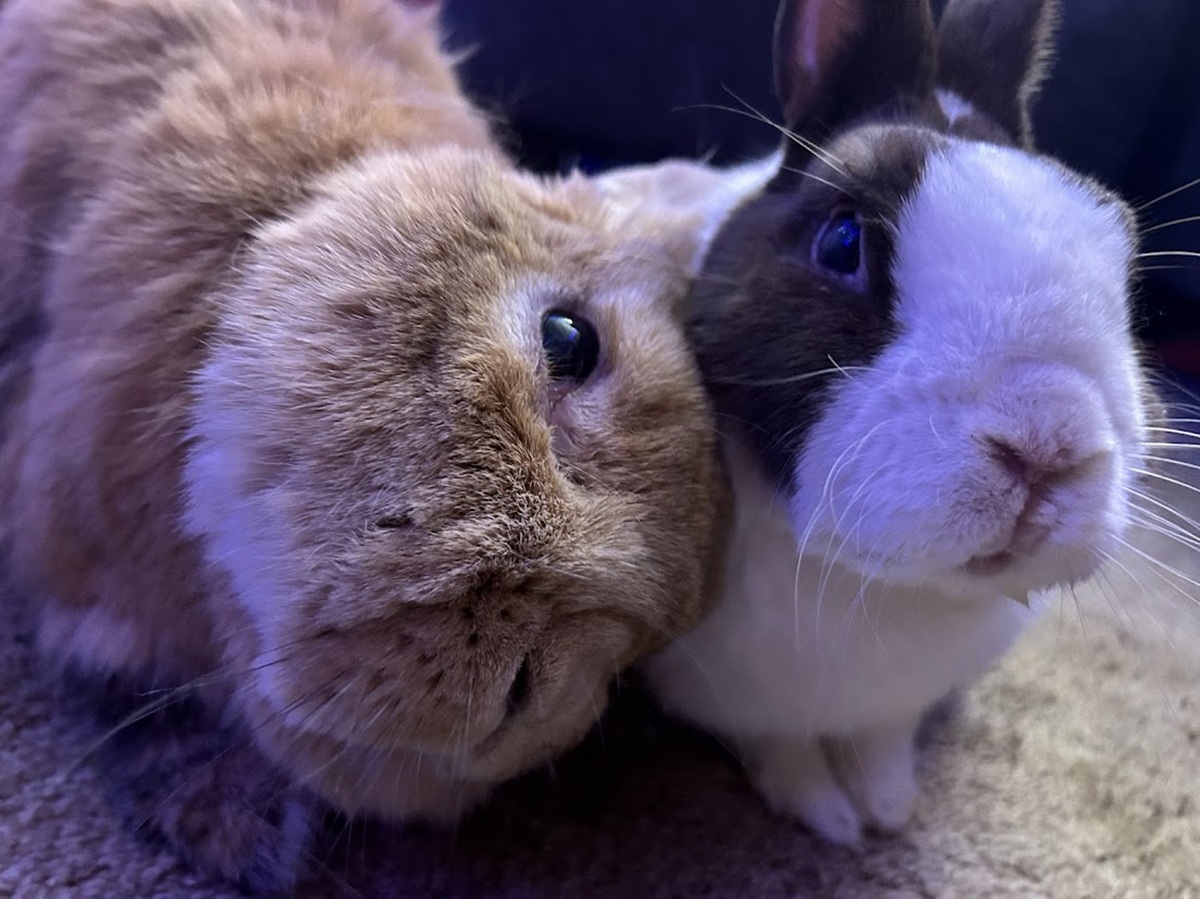
Duchess didn’t come running that morning.
Every morning when I wake up, I open the app for the automatic feeder, check the camera, and watch as Duchess, Brownie, and Koala run for their pellets. Brownie and Koala had already started eating before the pellets even finished dropping but, even after calling her, Duchess didn’t run over.
I found her in her litter box, motionless on her side. She struggled to get up when she heard my voice. She couldn’t. She flopped like a ragdoll as I tried to steady her in my arms, her head drooping to the side. She had lost all control over her body.
The night before my lop-eared bunny had been fine – eating greens alongside her bond mates and running around their room – with no signs that in less than 12 hours she would begin a literal fight for her life.
The Fight for Survival
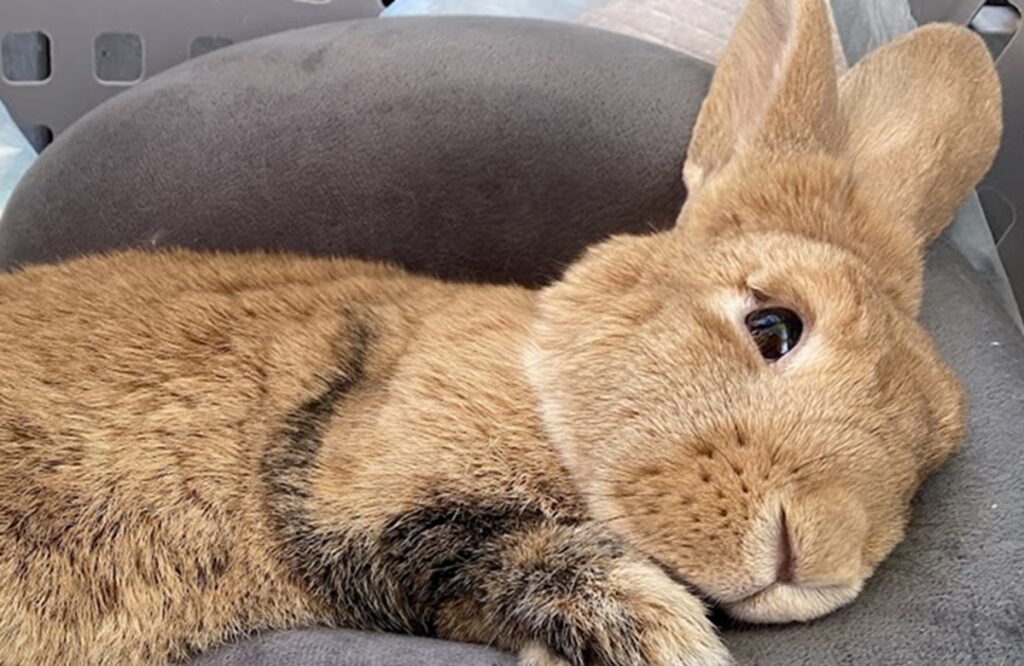
Duchess had head tilt, with dizziness and rolling, as a result of e-cuniculi, a common parasite in rabbits that causes a variety of symptoms, including head tilt, hind leg paralysis, and rolling. She began medication but, before it could begin to work, we had to deal with the debilitating symptoms of her new reality.
My strong-willed bunny couldn’t do anything for herself. I cleaned and dried her after she peed, gave her water from a syringe, and fed her hay, greens, and pellets by hand. I rotated her from side to side, propped her head up on a neck pillow when she rolled, and we talked to her a lot, noticing that our encouraging tone perked her up. My teen daughter helped, which made a big difference for us both.
I slept little in the first weeks as every sound from the stroller by my bed, where she slept on pee pads (and eventually fake lambskin to better absorb pee), jolted me up to check on her, to prop her up, and to give her water if she was thirsty.
One Hop at a Time
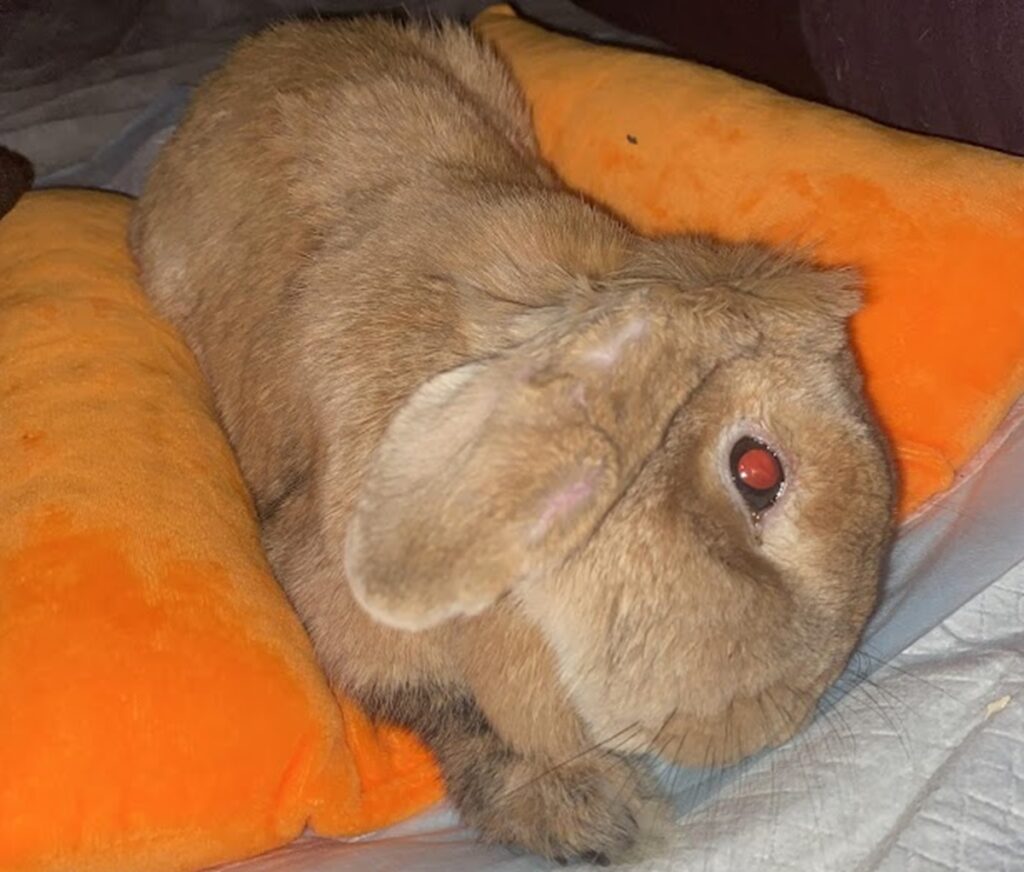
The vet had little hope for Duchess, not thoroughly convinced, as I was, that she had e-cuniculi and advising that if she wasn’t better in a few weeks, we would need to consider letting her go. As we cried in the car, Duchess started to move in her basket. She pushed and pushed on her hind legs and eventually stood up – albeit briefly – an act of defiance that showed us she, too, had heard the vet and she wasn’t going to give up quite so easily.
From then on, as the medication began to work and we cheered her on, every day marked new progress. She no longer needed me to give her water in a syringe or feed her. She sat up and drank and ate on her own, her head still drooped to the side. She stopped flopping around, gaining more of her balance back so she could hop.
She moved from the stroller or laundry basket, into a playpen, a slightly larger space, until she became even steadier. From there, she moved to a large pen and, within a few months, she was back to being free run in her room with her bond mates.
Seeing Life Sideways
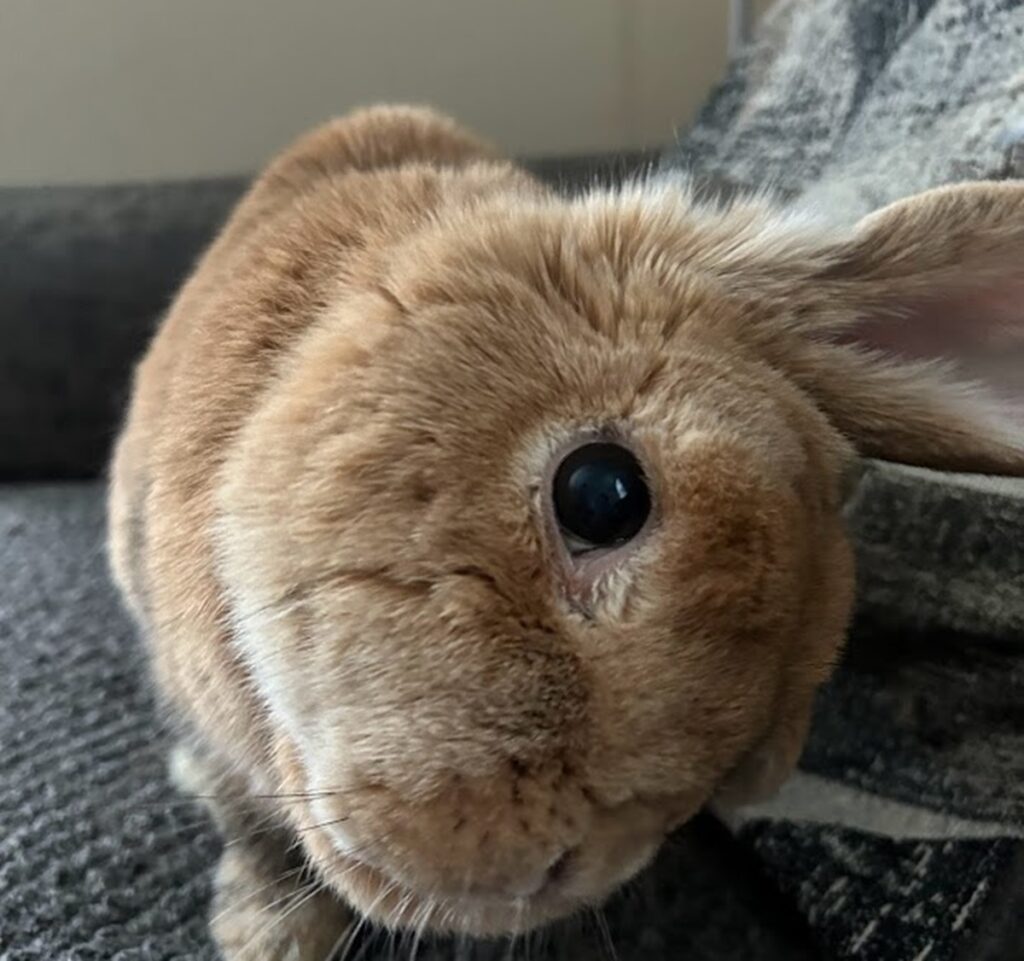
It’s been three years since that May morning I found Duchess motionless in her litter box. She still has the same sweetness, spunk, and attitude she always has. She likes what she likes and wants what she wants. She doesn’t take crap from anyone, including her newly-bonded bun mate, Obi, and chases our budgies when they want a bite of her greens.
Some things have changed. Her head remains tilted, although she can briefly hold it up straight. She can run but will often go in circles first before heading to where she wants to go. We’ve had to make adjustments for her comfort but, otherwise, she’s the same strong-willed bunny as the day we adopted her five years ago.
Tips for Living with a Specially-Abled Pet
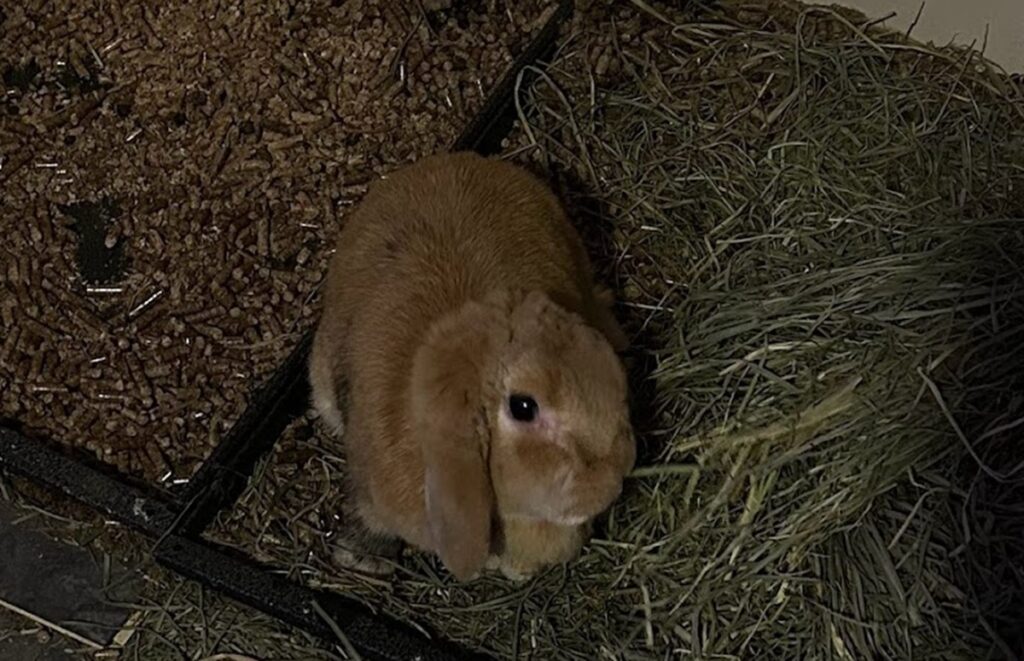
Life with a specially-abled pet really isn’t that much different than life with a pet who doesn’t have health issues. It just requires some adjustments – patience when she’s exploring a new space and a walk-in litterbox (although she can hop on some furniture), for example. Here’s just a little bit of what Duchess taught me:
- Patience is important, especially if your pet, like Duchess, is dealing with a new health struggle. Some days will be good and others won’t. Keep that old saying “one step forward, two steps back” in mind. It’s tough to remember, though, when you’re worried and exhausted so don’t be too hard on yourself if you have moments when you want to give up.
- Be a cheerleader. Seeing someone you love struggle is really hard, but one thing Duchess taught me was the power of encouragement. The more we encouraged her, the more positive we were, the more she responded, her mood visibly improved, and she fought harder.
- Pay attention to what your pet is telling you. Duchess let us know when she was ready to eat and drink on her own again and when she was steady enough to move from her smaller pen to her larger one. Most importantly, she told us she wasn’t ready for her story to end.
- Find support. I’ve dealt with a lot of rabbit illnesses and diseases, including e-cuniculi, in my more than 20 years of having bunnies. But head tilt was new to me. I reached out to other bunny parents and joined online groups and got a ton of helpful advice that helped me better care for Duchess.
- Trust your instincts. Had I listened to the vet, we may have lost Duchess three years ago. You know your pet best.
Have you had or do you have a specially-abled pet? Head over to our Facebook page and share your story with us.