
Photo by Jesper Brouwers on Unsplash
Asking ourselves “what if” is sometimes necessary, especially when it comes to preparing for the unpredictability of life. What if we lose power for an extended time? What if we have to evacuate our home? What if we’re stuck at home for longer than expected? Are we prepared to care for ourselves and our pets in case of an emergency?
Answering those questions, and any what if’s that are relevant to your family, now will help ease the stress when the unexpected happens. As you make plans for what you’ll do during an emergency, create a pet emergency kit, if you don’t already have one.
Pet Emergency Kit Checklist
Having an emergency kit for your pets is just as important as having one for your family. While it may seem like a lot, especially at first glance, the good news is you only have to create it once, updating it as necessary – such as swapping out food and water for fresh supplies – in the future.
Important Documents

Let’s start with important documents. What documents would be essential in an emergency or if your pet becomes lost or you are unable to care for them? Answering that question will help make sure you have everything you need, including:
- A list of all of your pets, including such pertinent information as name, age, type of pet, breed, color, and weight. You may want to add any unique identifying information, too. Your dog, for example, may have cataracts that make their eyes appear white.
- A current photo of each pet
- Medical information, such as vet records, vaccine certificates, and prescriptions for medications
- Instructions for feeding. Include such information as type of food, foods to avoid, portion size, and feeding times
- A list of emergency contacts, including your vet and those who will care for your pets if you can’t
- Photocopies of adoption or ownership paperwork
If your pet has a microchip, regularly check that the contact information is up-to-date. Current contact information will increase the chances of you being reunited with your pet if you are separated. Consider having your pet microchipped if they don’t have one. The process is easy, quick, and affordable.
Add the information from your pets’ microchip – the microchip company, its contact information, and the ID number of the microchip – to your collection of important documents.
Once you’ve gathered all of your documents, place them in a waterproof container.
Essential Supplies
Documents are just one part of your pet emergency kit. You’ll also need to add food, water, medications, and other essential supplies.
1. Food and Water

Some experts recommend having food and water supplies that will last between three and seven days while the Centers for Disease Control and Prevention advises a two-week supply. Whichever option you choose, make sure you swap out the food and water for fresh supplies at least every six months.
A few things to keep in mind when gathering supplies:
- Consider including treats, which may provide comfort and normalcy
- Pack bowls for water and food. Collapsible bowls will save space.
- If your pet uses food that is in a can, include a manual can opener in case you are without power
2. Medications
As with food and water, try to keep a two-week supply of medications for your pets. If your pet takes heartworm and/or flea and tick medication, keep a month’s supply on hand.
Don’t forget OTC medication, if applicable. Rabbits, for example, may go into GI stasis when in stressful situations. Simethicone (baby gas drops) and a syringe would be an essential for a rabbit emergency kit.
As with the food, make sure you regularly swap your supplies out for fresh medication. Consult with your vet to determine how often you should replace meds.
3. Other Supplies
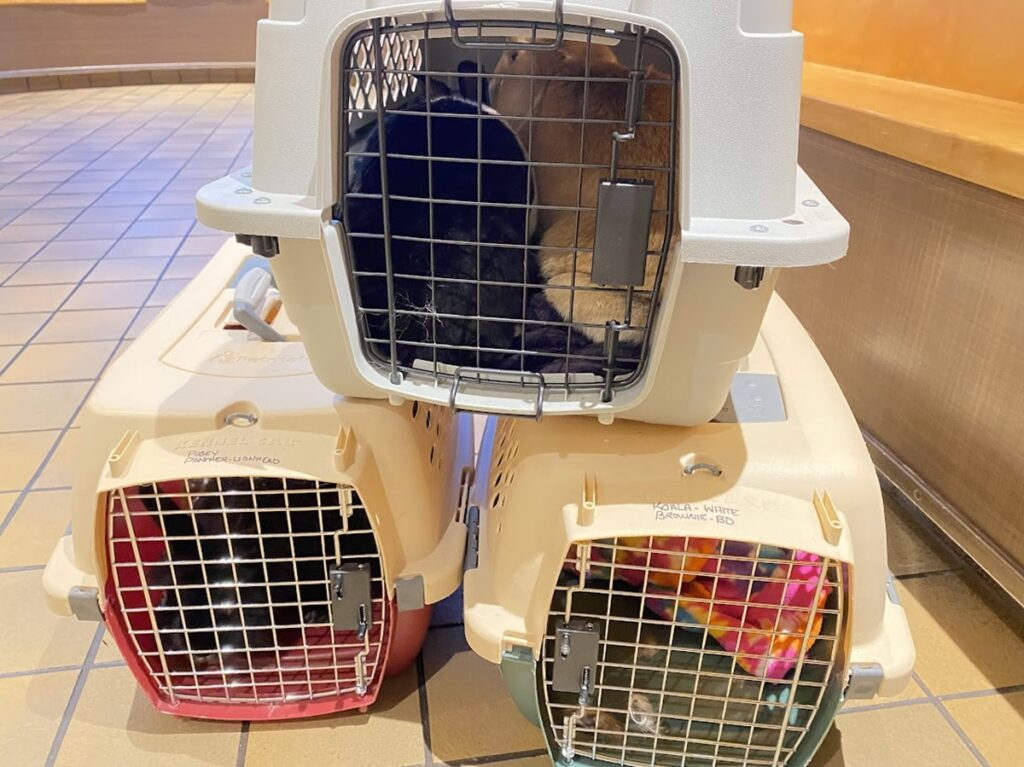
What does your pet need on a daily basis that’s necessary for their wellbeing and comfort? Depending on what type of pets you have, you may want to add such items as:
- Pet carrier with bedding
- Leash and collar with tag (consider getting a backup tag in case your pet’s is lost)
- Litterbox/litter/scoop
- Bedding
- Grooming supplies, including brush, comb, nail clippers, and shampoo
- Toys
- Items to chew for pets such as chinchillas, hamsters, and rabbits
- Plastic bags, paper towels, and cleaning supplies for accidents
- Garbage bags
- Poop bags
- A first aid kit
You know your pet best, so think about what items are necessary to ensure your pets’ health, safety, and comfort during an emergency.
Once you’ve created your pet emergency to go bag, keep it somewhere easy to reach, and refresh the supplies once every six months. A good rule of thumb is to swap out supplies when the time changes. Be sure to consult with your vet about medications – their expiration date, how to store them, and when to switch them out of your emergency kit.
What else have you included in your pet emergency kit? Visit us on our Pet-Friendly PA Facebook page and let us know.